

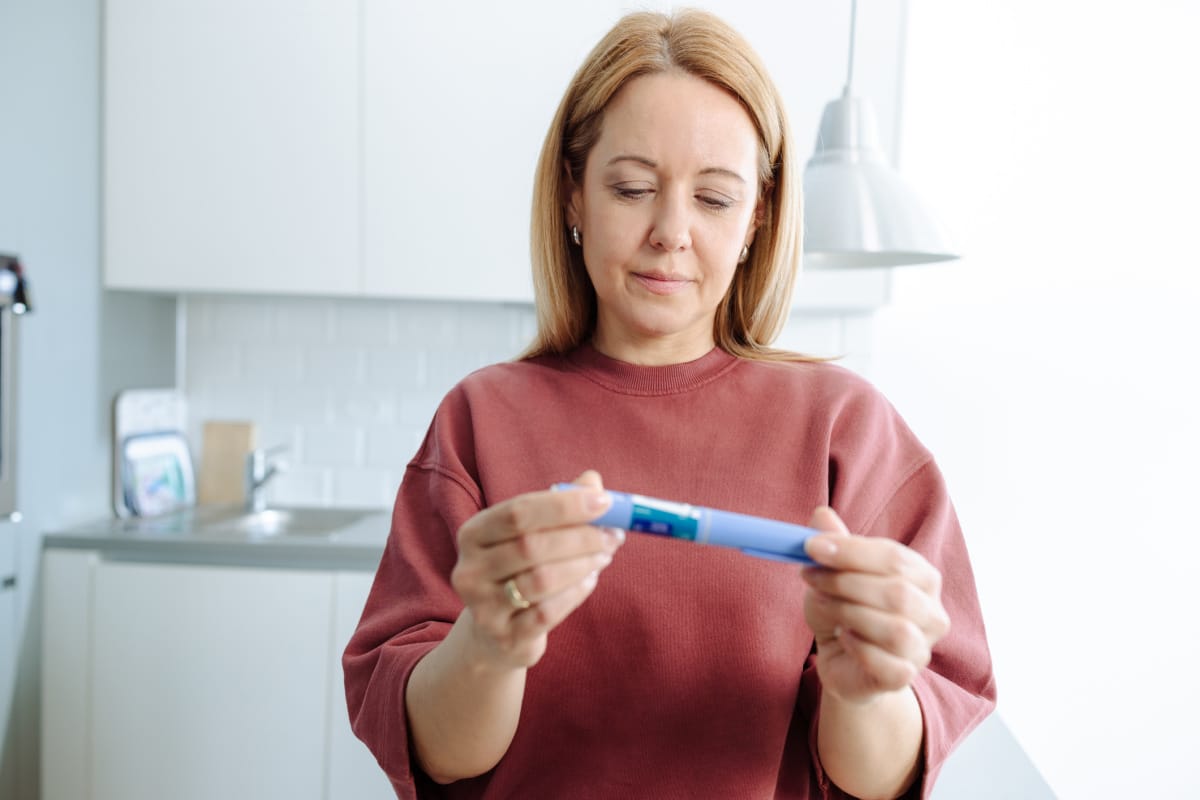
Before starting a GLP-1 weight loss program, most people have the same question: what is this actually going to feel like?
They want a practical answer. What does a typical day look like? What changes, what stays the same, and what should I prepare for?
At Kalos Medical Spa in Fort Worth, we have worked with many GLP-1 medical weight loss patients who have successfully reached their goal weight. Here is a realistic picture of what daily life looks like on these medications, based on the honest, week-by-week experience most patients have.
How GLP-1 Medications Work
GLP-1 medications, including semaglutide and tirzepatide, work by mimicking a hormone your body naturally produces after eating. They slow digestion, signal the brain to reduce hunger, and help stabilize blood sugar. The result for most patients is feeling full faster, staying satisfied longer, and experiencing fewer cravings throughout the day.
The medication does not take food away from you. It changes your relationship with it.
What this looks like in practice varies from person to person. However, there are consistent patterns. Here is what a typical day and week tend to look like for patients in our program.
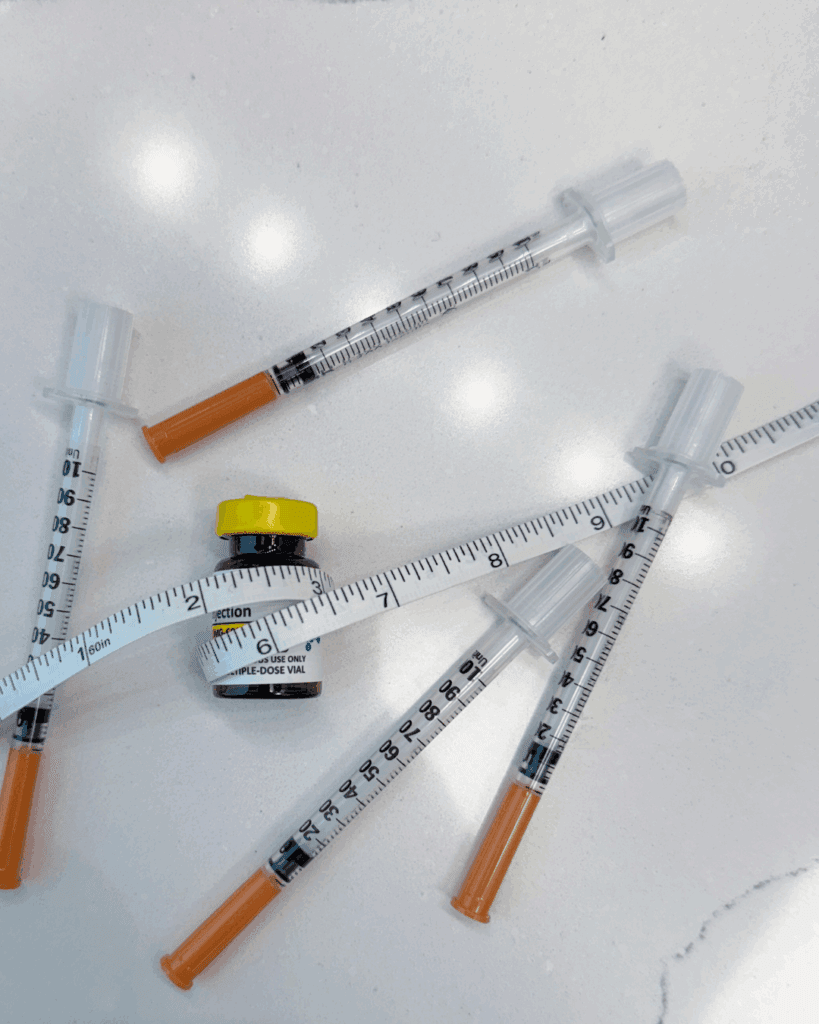
A Typical Day on GLP-1s (Around Month Two)
The first month of GLP-1 use is expected to get your body used to the medication, without aiming for substantial weight loss yet. By the second month, most patients have found their rhythm and have slowly increased doses to start losing weight. Here is what a day often looks like:
Morning
One of the first things most patients notice is that morning hunger changes. The urgency that used to send you to the kitchen right away tends to soften. Many patients describe drinking a small coffee or water first, before thinking about food. This is something that would have felt difficult before. Breakfast is usually smaller and more intentional, focusing on protein intake.
Midday
Lunch looks different on GLP-1s. Portions are smaller, not because you are restricting, but because you physically reach a point of fullness faster. The important consideration here is that what you eat matters more than it used to. Because you are eating less overall, your body needs those smaller meals to be nutrient-dense. Protein is especially important. It helps preserve muscle mass while you lose fat, which is something our team at Kalos monitors closely.
Afternoon
One of the most notable changes patients report is the afternoon snack craving diminishing. The mid-afternoon pull toward sugar or processed carbs, the thing that used to derail the best intentions, tends to reduce significantly. The medication stabilizes blood sugar and reduces the hormonal spikes that drive cravings, making it easier to stay on track.
Dinner
Dinner tends to be the meal patients notice the most. What used to be a full plate is now half a plate, and that is genuinely enough. The sensation of fullness is real and satisfying. Most patients describe the evening as the time they used to do most of their unplanned eating, and that is often the first behavior that changes.
Evening
For many people, evenings used to mean snacking out of habit or boredom. That impulse tends to quiet on GLP-1s, sometimes immediately and sometimes gradually over the first few weeks. Patients describe finally feeling like food is something they eat when they are hungry, rather than a way to manage stress or fill time.
The medication changes your relationship with food, giving you more control over when and why you eat.
A Week in the Program
Here is what the weekly rhythm of the Kalos GLP-1 program looks like:
Injection Day | Weekly Visit to Kalos
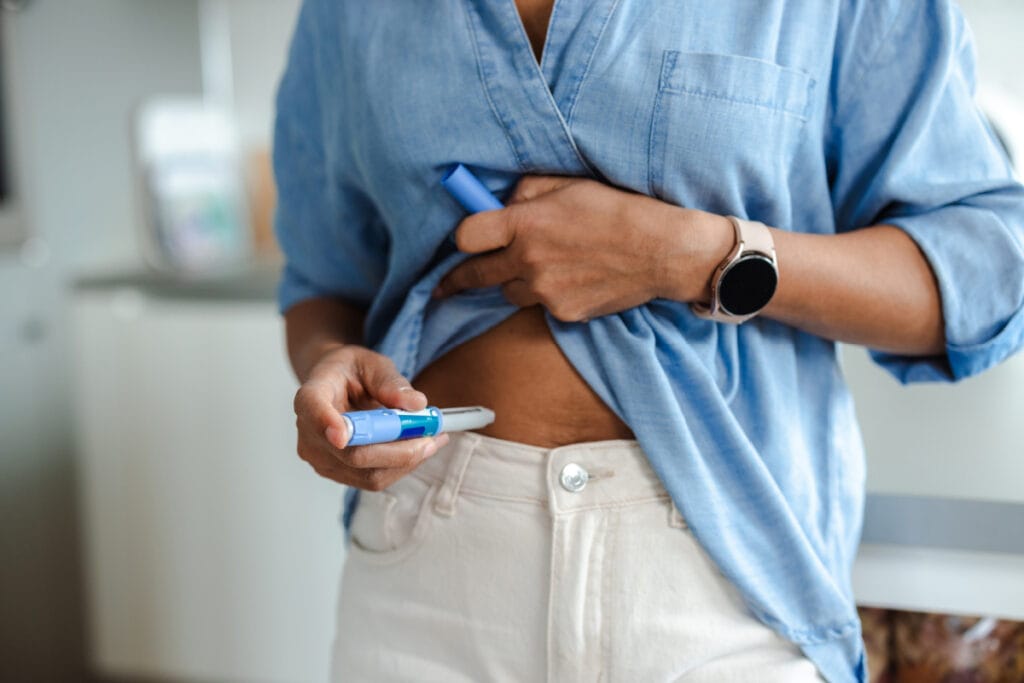
Once a week, you come into Kalos for your injection. This is one of the meaningful differences between our program and a telehealth subscription: you are not injecting yourself at home. Our medical staff administers every dose.
The visit is quick. Most patients are in and out in 5 to 15 minutes. However, it is also a natural checkpoint. How are you feeling? Any side effects? Any adjustments needed? That kind of ongoing, in-person oversight is what catches small issues before they become unmanageable.
Rest of the Week | Daily Life Continues
Outside of your injection day, the program asks only that you stay intentional about what you eat and remain hydrated. Most patients describe the non-injection days as manageable and routine, with less “food noise.”
Energy varies by patient and by week. Some people notice improved energy as their weight decreases. Others experience some fatigue in the early weeks, especially as their body adjusts to eating less. Our team tracks this with you and can adjust your dose if needed.
Month One | Your First ShapeScale Scan
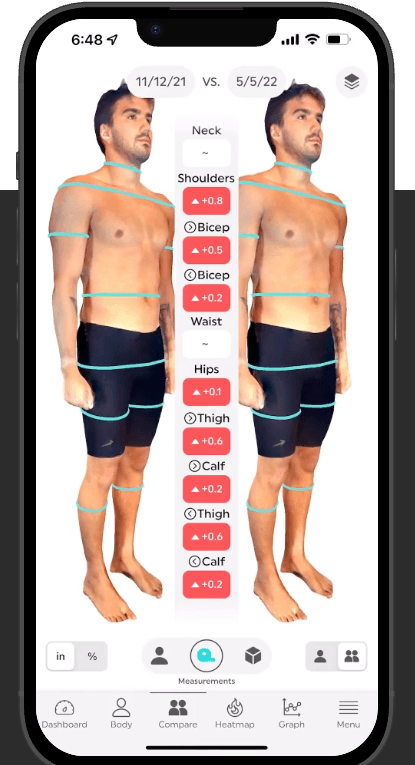
During your first month of treatment, we complete your first ShapeScale 3D body composition scan. This is one of the parts of our program patients appreciate most, because the scale alone does not tell the full story.
The ShapeScale captures your body in 3D and tracks exactly where you are losing fat and where you are preserving muscle. For many patients, this scan is a great way to actually see their progress.
What the First 2-4 Weeks Feel Like
The first two to four weeks are an adjustment period for most patients. Here is what is common:
- Mild nausea, especially in the first week or two. This is usually manageable and temporary.
- Fatigue as your body adjusts to eating less and to the medication itself.
- Digestive changes. Some bloating, constipation, or loose stools early on.
- A different sensation around hunger, including feeling satisfied at times when you would normally expect to be hungry.
These symptoms improve significantly as your body adjusts. Our team works with you on strategies that help: staying hydrated, eating smaller and more frequent meals, avoiding high-fat or heavily processed foods in the early weeks, and increasing doses gradually.
By month two, most patients describe feeling like themselves, but with more energy, smaller portions, and less preoccupation with food.
What Changes and What Does Not
A few things to set realistic expectations:
What changes:
- Hunger and cravings. Significantly reduced for most patients.
- Portion sizes. Naturally smaller without feeling restricted.
- Energy. Often improves as weight decreases, though variable early on.
- Relationship with food. Less emotional, more intentional.
- Body composition. Measurable fat loss, trackable with ShapeScale.
What does not change on its own:
- Eating habits. The medication reduces appetite but does not build new habits automatically. Our nutritional guidance is designed to help you use this window to form patterns that last.
- Muscle mass. GLP-1s can contribute to some muscle loss alongside fat loss. This is why our team emphasizes protein intake and can discuss strategies for preserving lean mass throughout treatment.
- The underlying reasons some people struggle with food. The medication helps enormously, but the behavioral work still matters.
What Happens When You Are Ready to Stop
This is a question we discuss often, and it is a good one. GLP-1 medications help regulate hunger hormones, and when you stop, those hormones can rebound. That is why we build a plan for tapering off gradually rather than stopping abruptly, and why we discuss maintenance dosing (microdosing) and lifestyle strategies well before you are ready to step down.
Our goal is to help you reach your goal weight, build sustainable habits during treatment, and have a clear plan for what comes next. That may be a maintenance dose, a microdose, a non-surgical body contouring treatment, or a conversation with Board-Certified Plastic Surgeon Dr. Emily Kirby about surgical options.
Schedule Your ConsultationIf you are considering GLP-1 weight loss injections, the next step is a consultation at Kalos Medical Spa in Fort Worth. All treatments at our medical spa are supervised on-site by Board Certified Plastic Surgeon Dr. Emily Kirby. We will review your health history, discuss your goals, and walk you through every step of the program before you commit to anything.
