

Why Stretch Marks Are So Hard to Treat (And What Actually Helps)
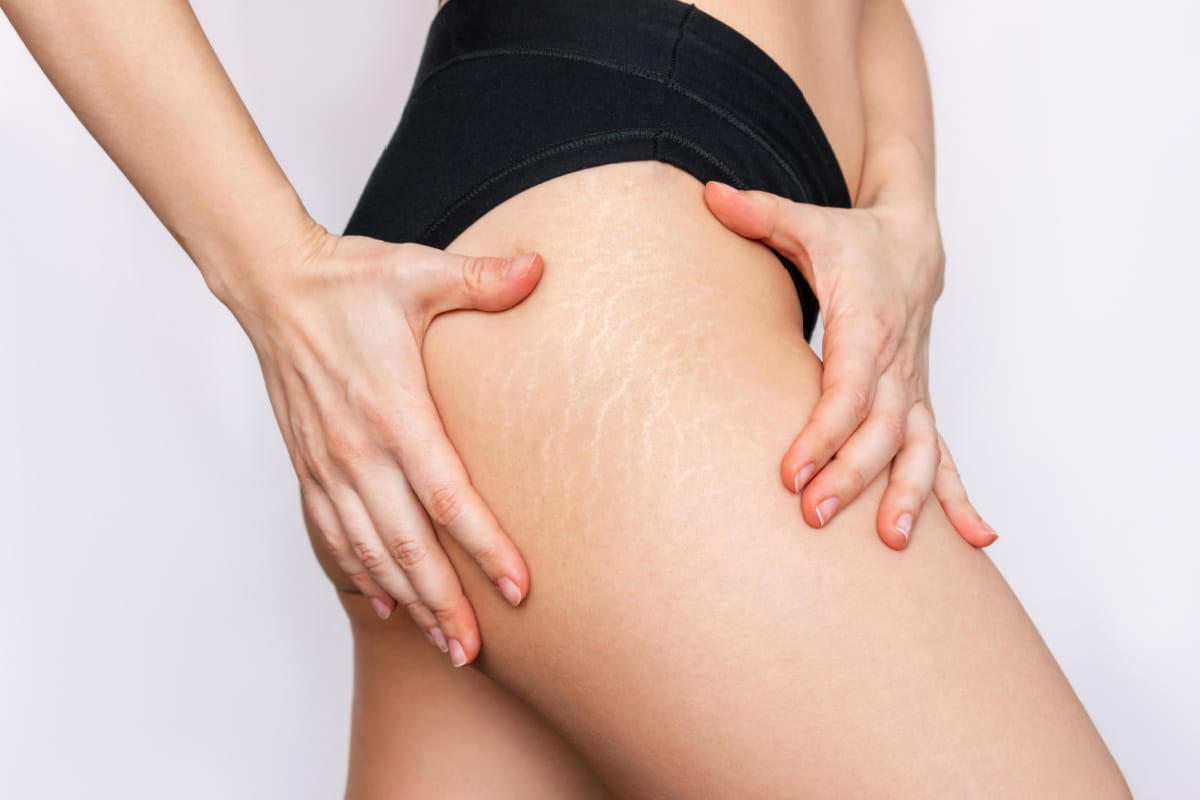
Stretch marks are a frequent concern at Kalos Medical Spa, and one that tends to come with a long history of disappointing results from over-the-counter products. Patients arrive having tried cocoa butter, vitamin E oil, Bio-oil, retinol creams from the drugstore, and every at-home roller on TikTok, only to find that the marks on their abdomen, thighs, hips, or arms have barely changed.
The reason those products disappoint has to do with what a stretch mark actually is. This guide explains why stretch marks are so stubborn, why most creams do not work, and which medical-grade treatments at our Fort Worth medical spa can genuinely improve their appearance. We will also cover when a surgical consultation with Board-Certified Plastic Surgeon Dr. Emily Kirby makes more sense than non-surgical treatment.
What Stretch Marks Actually Are
Stretch marks, known medically as striae distensae, are actually scars. When tissues stretch rapidly, during pregnancy, a growth spurt, or weight gain, the collagen and elastin fibers in the dermis (the deeper, 2nd layer of skin) tear and heal in a disorganized pattern.
Collagen is the protein that keeps tissues firm and smooth and provide structure; elastin is what allows the tissues to recoil. When these fibers are damaged, the result is a linear scar, typically with a noticeably different texture and color than the surrounding tissues.
Stretch marks go through two general stages:
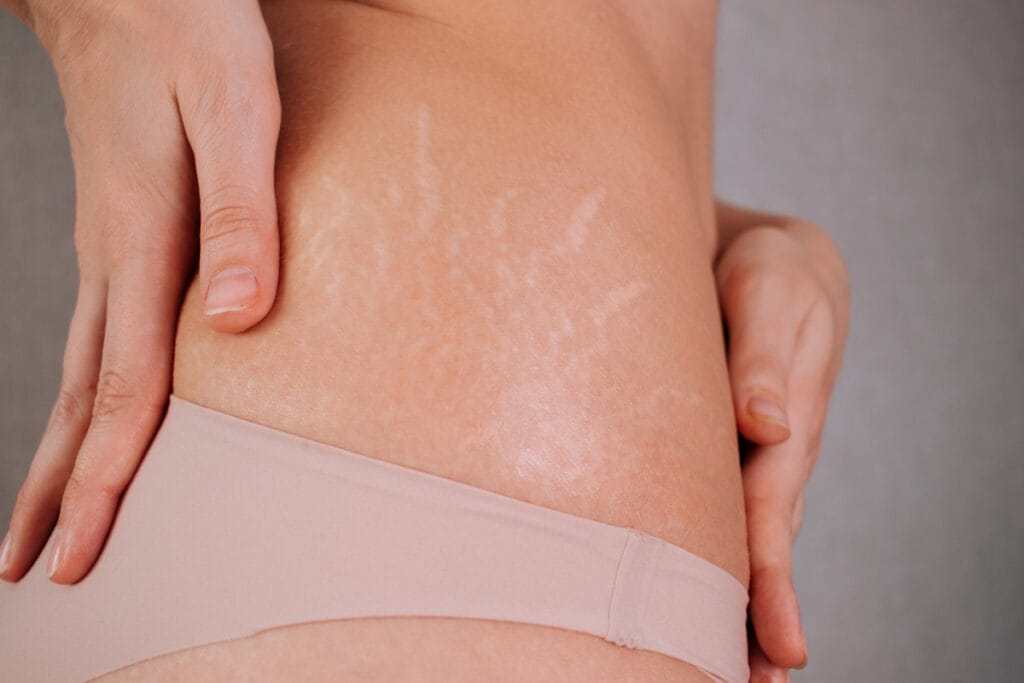
- Striae rubra (early stage): Red, pink, or purple marks that are new and still active. The discoloration comes from dilated blood vessels beneath the surface. This is when treatments work best.
- Striae alba (mature stage): White or silver marks that have lost pigmentation. The scar tissue is set, and improvement is more gradual.
Understanding which stage you are in helps determine which treatment will give you the best result.
Why Creams, Oils, and Vitamin E Usually Disappoint
Most over-the-counter products marketed for stretch marks only reach the surface of the skin, the epidermis. Stretch marks are in the dermis, below the surface. A moisturizer or oil that sits on top of the tissues cannot reorganize scar tissue below, no matter how regularly you apply it.
The research is consistent on this point. Studies evaluating cocoa butter, almond oil, vitamin E, and similar topicals have generally found minimal benefit beyond basic hydration. Hydrated tissues look better than dry tissues, which may explain why some people feel their stretch marks appear less obvious after regular moisturizing. The scar itself is unchanged, but the skin is nicely moisturized.
Medical-grade skincare is a different category. Formulations with prescription-strength retinoids, growth factors, and peptides, such as those from ZO Skin Health and SkinCeuticals, can support healthier collagen turnover and may help with very early striae rubra (the pink/red new stretch marks). They are a useful supporting tool, but rarely enough on their own for established stretch marks.
Treatments That Genuinely Help
At Kalos, we focus on treatments that reach the dermis, where the scar actually is. The following are the options that have a meaningful track record for improving stretch marks.
Morpheus8 RF Microneedling (Our Go-To for Stretch Marks)
Morpheus8 RF microneedling is usually the most effective non-surgical treatment we offer for stretch marks, and it is the treatment Dr. Kirby most often recommends for them. Morpheus8 combines two technologies that address the underlying problem:
- Microneedling creates tiny, controlled openings that trigger the body’s natural healing, with collagen and elastin production.
- Radiofrequency (RF) energy is delivered through the needles to heat the deeper layers of the dermis, which remodels existing scar tissue and stimulates additional collagen formation.
The combination allows us to reach depths of up to 8 mm, which is well into the dermis where stretch marks originate. That depth is what makes Morpheus8 different from traditional microneedling and is why it tends to produce more noticeable improvement in scar tone and texture.
Morpheus8 is well-suited for stretch marks on the abdomen, thighs, hips, buttocks, and upper arms. It is safe for most skin types and tones. Patients usually need a series of 2 to 3 treatments spaced 4 to 6 weeks apart, with additional sessions recommended for more established striae alba (the faded/white older stretch marks).
SkinPen Microneedling
SkinPen microneedling is a good option for more superficial stretch marks or for patients newer to in-office treatments. SkinPen uses the same collagen-induction principle as Morpheus8, without the radiofrequency component. Results are more gradual and best suited to finer, less established marks. SkinPen can also be combined with platelet-rich plasma (PRP) to support healing and collagen remodeling.
For deeper, more stubborn stretch marks, Morpheus8 is usually the stronger choice.
IPL Photofacial for Red and Purple Stretch Marks
If your stretch marks are still in the striae rubra (pink/red) stage, IPL photofacial can help reduce the red and purple discoloration. IPL uses concentrated pulses of light to target the dilated blood vessels that give early stretch marks their color. Once those vessels are neutralized, the marks appear less obvious and tend to mature into lighter, less noticeable lines.
IPL works well in combination with Morpheus8, since IPL addresses color while Morpheus8 addresses texture and depth. This pairing is a frequent recommendation for patients with fresh stretch marks from pregnancy or recent weight changes.
IPL is most effective on fair to medium skin tones, but is less helpful once stretch marks have faded to white.
Laser Skin Resurfacing (CO₂ and ResurFX)
Fractional laser skin resurfacing is another evidence-based option for stretch marks, particularly mature, white striae alba. Both CO₂ laser and ResurFX use light energy to create microscopic treatment zones in the dermis, which prompts the body to replace damaged tissue with fresh collagen.
- CO₂ laser resurfacing is the stronger of the two, with more downtime and more significant improvement in texture and color for established stretch marks.
- ResurFX is a non-ablative option with a faster recovery.
During your consultation, our team evaluates the location, depth, and stage of your stretch marks to determine which laser therapy, if any, is the right fit.
Medical-Grade Skincare as a Supporting Tool
Topicals will not erase stretch marks on their own, but prescription-strength retinoids and treatments from ZO Skin Health and SkinCeuticals can support the skin’s healing response between in-office treatments. For patients with very early stretch marks, a medical-grade routine may help improve overall tone and texture and slow further change.
How We Build a Stretch Mark Treatment Plan at Kalos
No single treatment is right for every patient. At Kalos, we consider several factors before recommending a plan:
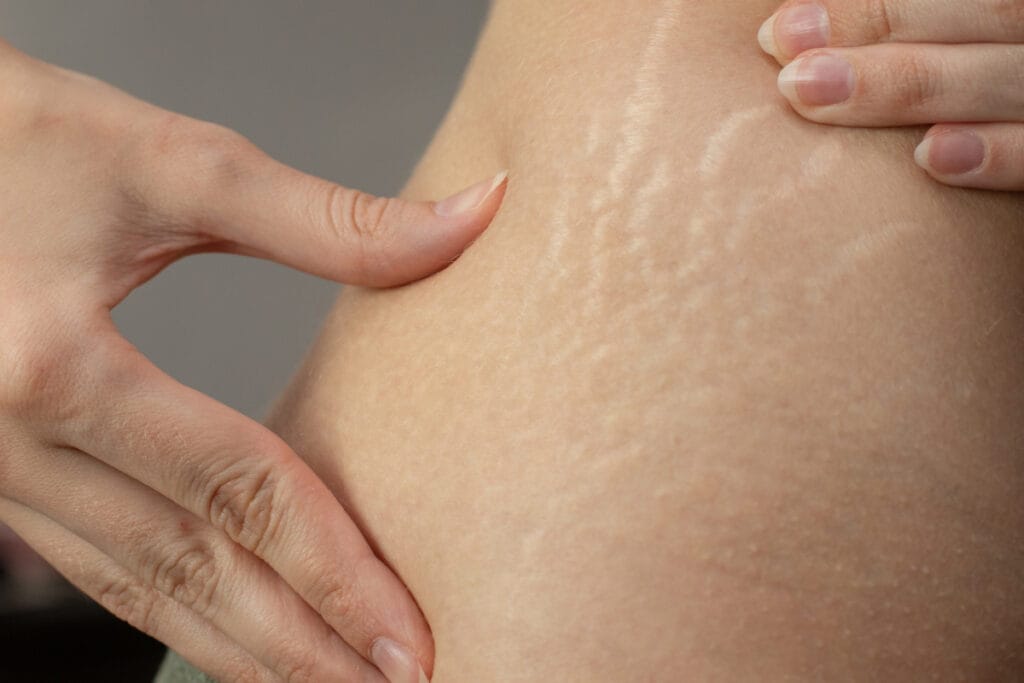
- Stage of the stretch marks: Red and purple marks respond best to IPL and Morpheus8 combined. White, mature marks usually do better with Morpheus8, CO₂ laser, or both.
- Location and depth: Abdominal and thigh stretch marks often benefit from the deeper reach of Morpheus8. Finer marks on the arms or chest may respond well to SkinPen microneedling.
- Skin tone: Some light-based treatments are less suitable for deeper skin tones. Morpheus8 is safe across the skin-tone spectrum, which is one reason it is a workhorse in our practice.
- Your timeline and downtime tolerance: Some treatments have more recovery than others. We match your plan to your schedule and your goals.
Most patients see the strongest improvement from a series of treatments, often combining modalities. Expectations matter here: Stretch marks almost never disappear completely, though they can usually be made significantly less noticeable with the right plan.
When Surgery May Be the Better Answer
For some patients, especially those who have gone through pregnancy or significant weight loss, stretch marks are tied to stretched tissues that non-surgical treatments cannot address. If you have loose tissues on the lower abdomen along with stretch marks below the belly button, a tummy tuck with Board-Certified Plastic Surgeon Dr. Emily Kirby may produce a more noticeable result than any laser or microneedling treatment, as surgery may physically remove a portion of the affected tissues.
The same is true for patients considering body contouring after weight loss. Procedures such as a tummy tuck, thigh lift, arm lift, or bra-line back lift remove excess tissue, along with the associated stretch marks, addressing both laxity and stretch marks at once.
If you are uncertain whether non-surgical treatment at Kalos or a surgical consultation with Dr. Kirby is the right starting point, we can help. Kalos and Kirby Plastic Surgery share a location and Dr. Kirby personally supervises both. Your personalized plan may include non-surgical treatments, surgery, or a combination of both, based on what suits your anatomy and your goals.
Schedule a Stretch Mark Consultation in Fort Worth
If you are ready to move beyond the drawer full of creams that have not worked, we will help you build a plan that actually addresses your stretch marks appropriately. During your consultation at Kalos, we evaluate the stage and location of your marks, discuss your goals, and recommend a treatment plan that fits your timeline and skin.Call or text Kalos Medical Spa at (817) 292-4200 to schedule your consultation.
